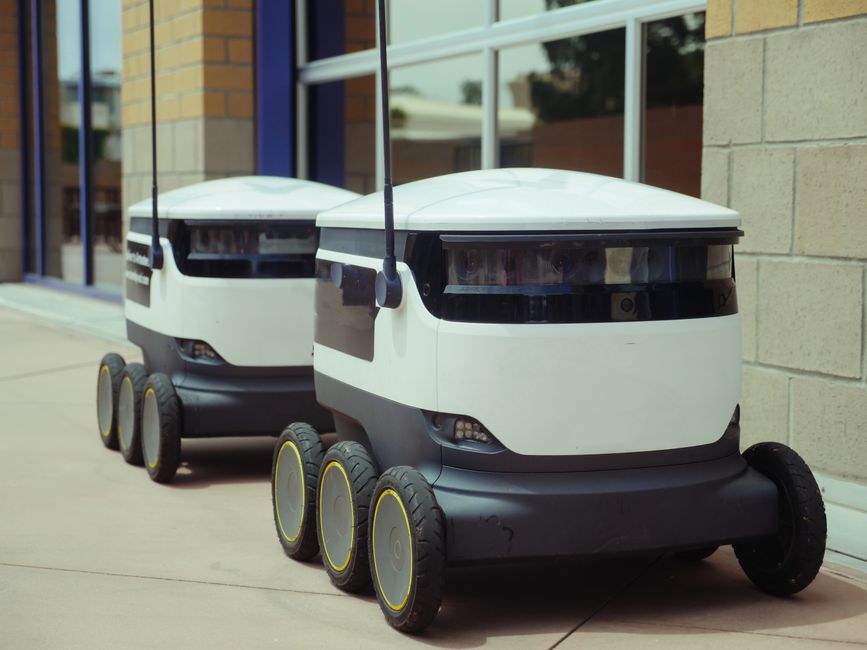
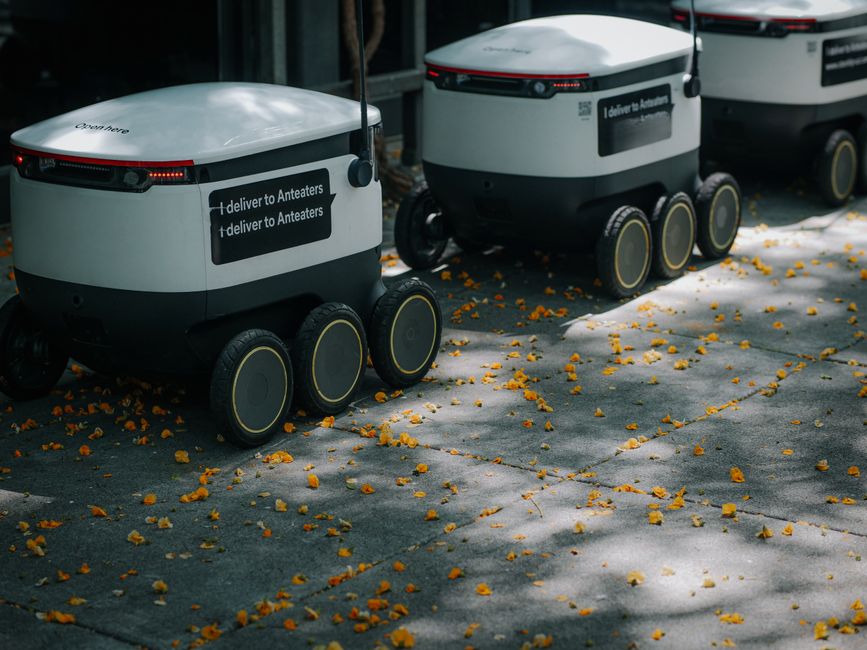
Logistics has historically been a game of managing variability. Weather, traffic, and human fatigue are the primary constraints that dictate the ceiling of operational efficiency. For decades, the industry has relied on incremental improvements—better route optimization software or slightly more fuel-efficient engines. These are optimizations, not transformations. The transition to self-driving logistics fleets represents the first fundamental shift in the economics of movement since the invention of the internal combustion engine.
\n\n
When you remove the driver from the equation, you are not just eliminating a labor cost; you are removing the single largest source of operational friction. Autonomous systems do not require mandatory rest periods, they do not suffer from cognitive decline due to fatigue, and they do not deviate from established protocols based on personal preference. This is the ultimate form of operational excellence: a system that operates at peak performance 24/7 without the degradation inherent in human-operated assets.
\n\n
The Strategic Shift from Management to Orchestration
\n\n
For leadership, the shift to autonomous fleets changes the nature of the job. You are no longer managing a workforce of operators; you are orchestrating a complex, data-driven ecosystem. This requires a move toward high-performance thinking where the focus shifts from reactive troubleshooting to predictive system design.
\n\n
Autonomous logistics fleets operate on the principle of continuous flow. In a human-driven model, the ‘hand-off’ between drivers or the downtime required for maintenance creates massive inefficiencies. With autonomous systems, these variables become predictable constants. Leaders who excel in this new era will be those who master the strategy of integration—ensuring that the fleet communicates seamlessly with warehouse management systems, inventory tracking, and predictive maintenance protocols.
\n\n
The Economic Multiplier of Autonomy
\n\n
The math behind autonomous logistics is aggressive. A truck that does not require a driver can stay on the road for 20 to 22 hours a day, compared to the 11-hour limit imposed by current regulations. This effectively doubles the asset utilization of every vehicle in the fleet. For an organization, this means:
\n
\n
Capital Efficiency: Fewer vehicles are required to move the same volume of goods.
\n
Predictability: Transit times become standardized, allowing for leaner inventory levels.
\n
Margin Expansion: By removing the highest variable cost—the human operator—the cost per mile drops significantly, providing a competitive moat that is difficult for traditional players to cross.
\n
\n\n
Decision-Making Under Algorithmic Constraints
\n\n
Implementing self-driving fleets is not merely a technology procurement project; it is a decision-making challenge. The transition requires leaders to accept that they are trading human intuition for algorithmic consistency. While the former can be brilliant, it is also erratic. The latter is rigid but perfectly scalable.
\n\n
The challenge for management is to build systems that account for the ‘edge cases.’ AI excels at standard operations, but the real world is filled with anomalies. Effective execution in this space requires a hybrid approach: autonomous systems handling the bulk of the transit, while a centralized remote command center manages the exceptions. This structure mirrors the best practices of modern AI deployment, where the machine performs the heavy lifting and human experts intervene only when the parameters fall outside of defined safety or operational thresholds.
\n\n
The Competitive Implication
\n\n
The early adopters of autonomous logistics will dictate the pricing floor for the entire industry. Once a fleet can operate at a 30% to 40% lower cost per mile, the market will force a consolidation. Companies that refuse to modernize their leadership approach to accommodate this technological shift will find themselves unable to compete on price or speed. This is not a future scenario; it is an inevitable outcome of the drive toward total system efficiency. The question is not whether autonomous fleets will become the standard, but how quickly organizations can retool their internal structures to absorb the change.